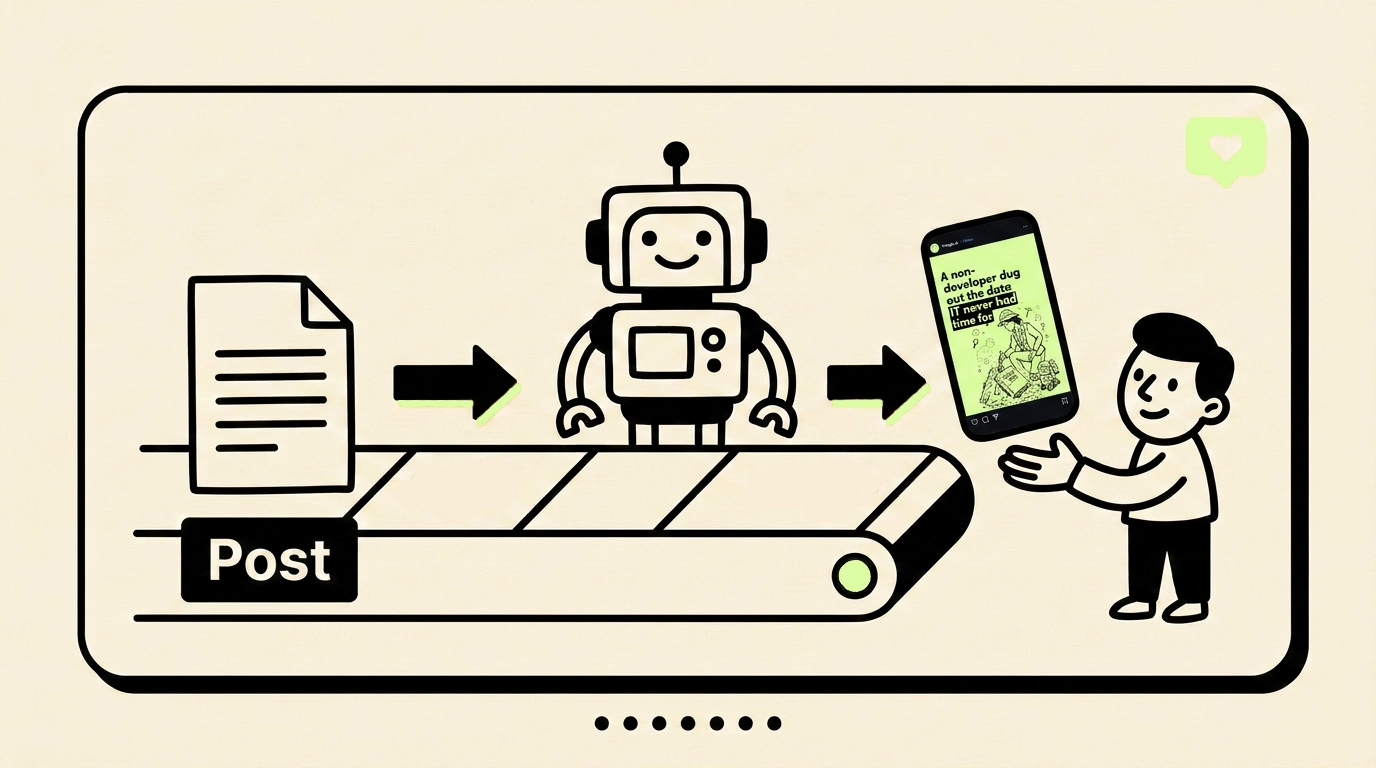
From Hours to Minutes: AI Image Pipeline for Social Media
We developed a semi-automated AI image pipeline that lets our marketer produce on-brand social media covers and carousels.

Client & Context
This time, the project was for our own team.
The marketer posts on social media several times a week. Posts cover expert tips, case studies, and awards.
We don't have an in-house designer for social media — we built a pipeline that lets a non-designer marketer do it instead.
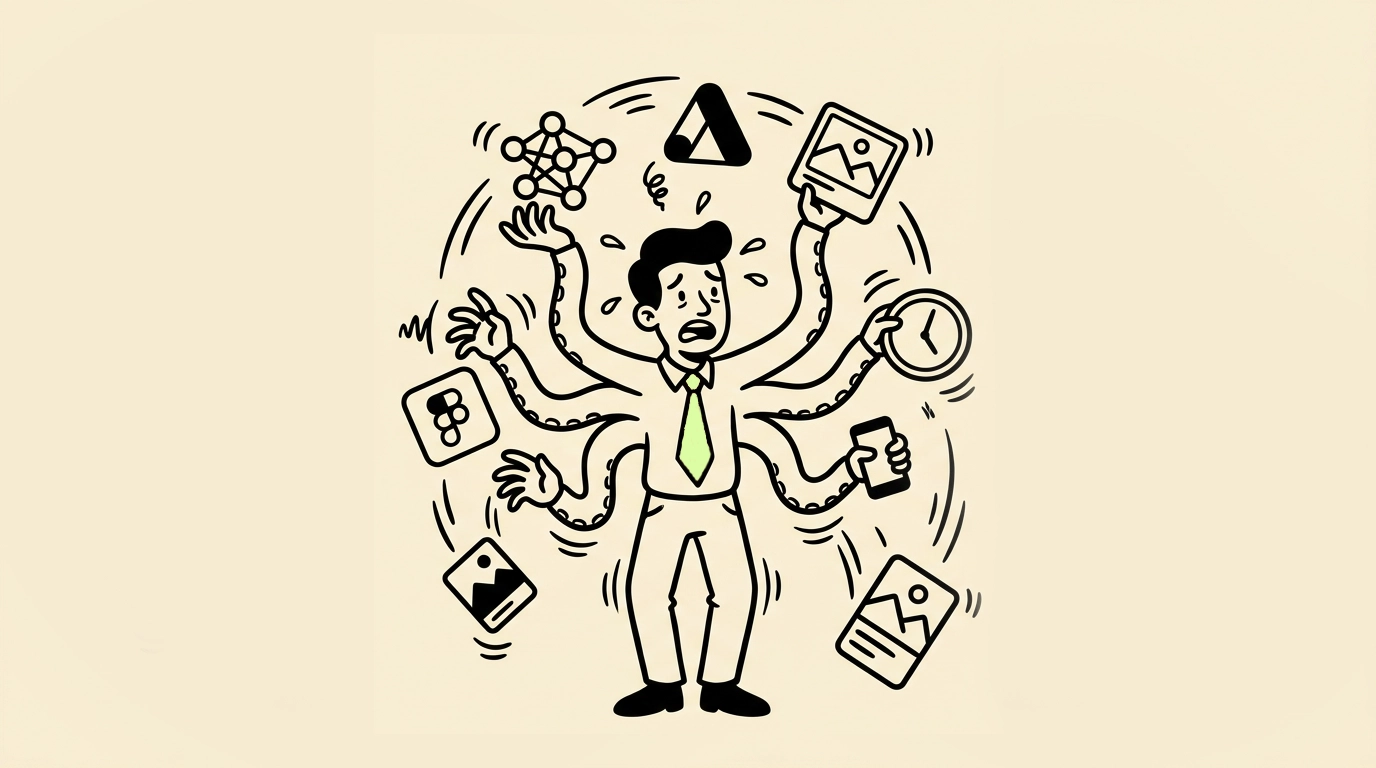
With no designer, one marketer ends up stretched across every tool at once — different neural nets and Figma.
Goals
- 1Make social media content creation fast, on-brand, and independent.
Challenges & How We Overpowered Them
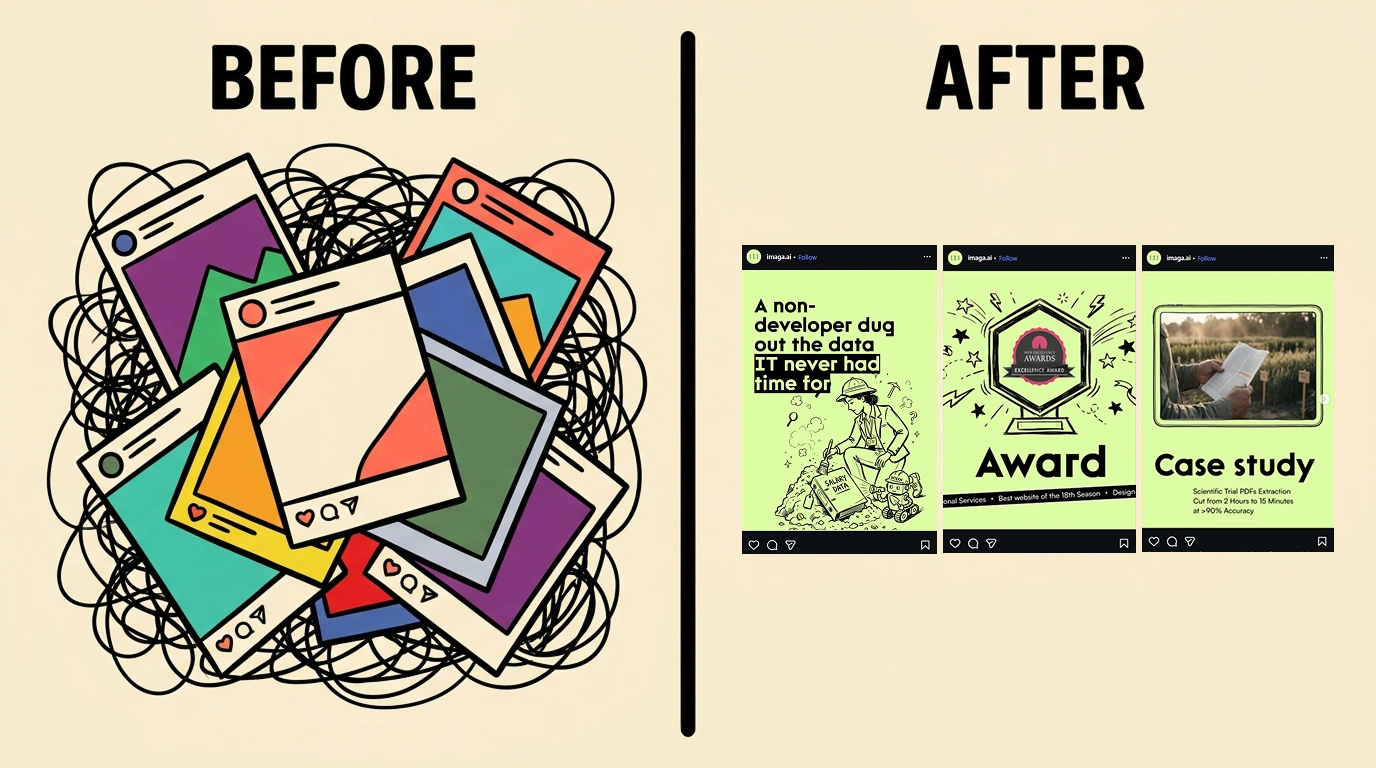
The hard part was ten images that still read as one brand; every ad-hoc AI attempt drifted off-style.
From Post Draft to Figma-Ready Covers
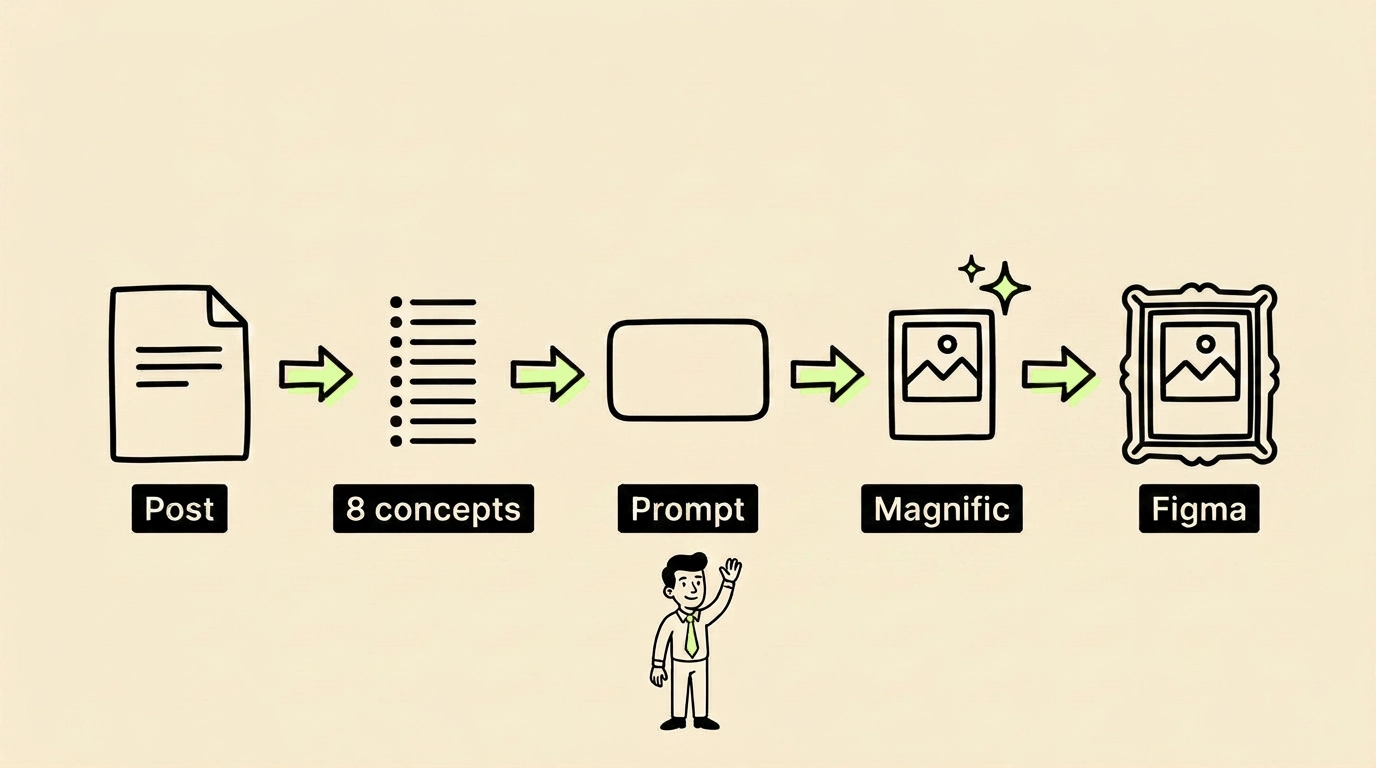
One person drives the whole chain end to end — a post becomes eight concepts, a prompt, a render, and a finished template — with no design skills needed at any step.
AI concept generation
After the post is written, a skill reads it. It proposes eight distinct illustration concepts.
The marketer picks the ones that fit. The skill writes prompts from fixed templates.
Generation via Magnific
The skill triggers image generation in Magnific through MCP. Previews land back in the same chat.
The marketer can regenerate, request new concepts, or describe their own.

The marketer approves or regenerates images without ever leaving the conversation. If needed, he can move directly to Magnific website.
Figma templates anyone can use
We built a set of Figma templates, few per content rubric. The marketer drops an image into a placeholder and it fits automatically.
Text fields are ready to edit. Layers are structured, so nothing shifts or breaks.
Someone with no design background and no Figma habit can finish a cover.
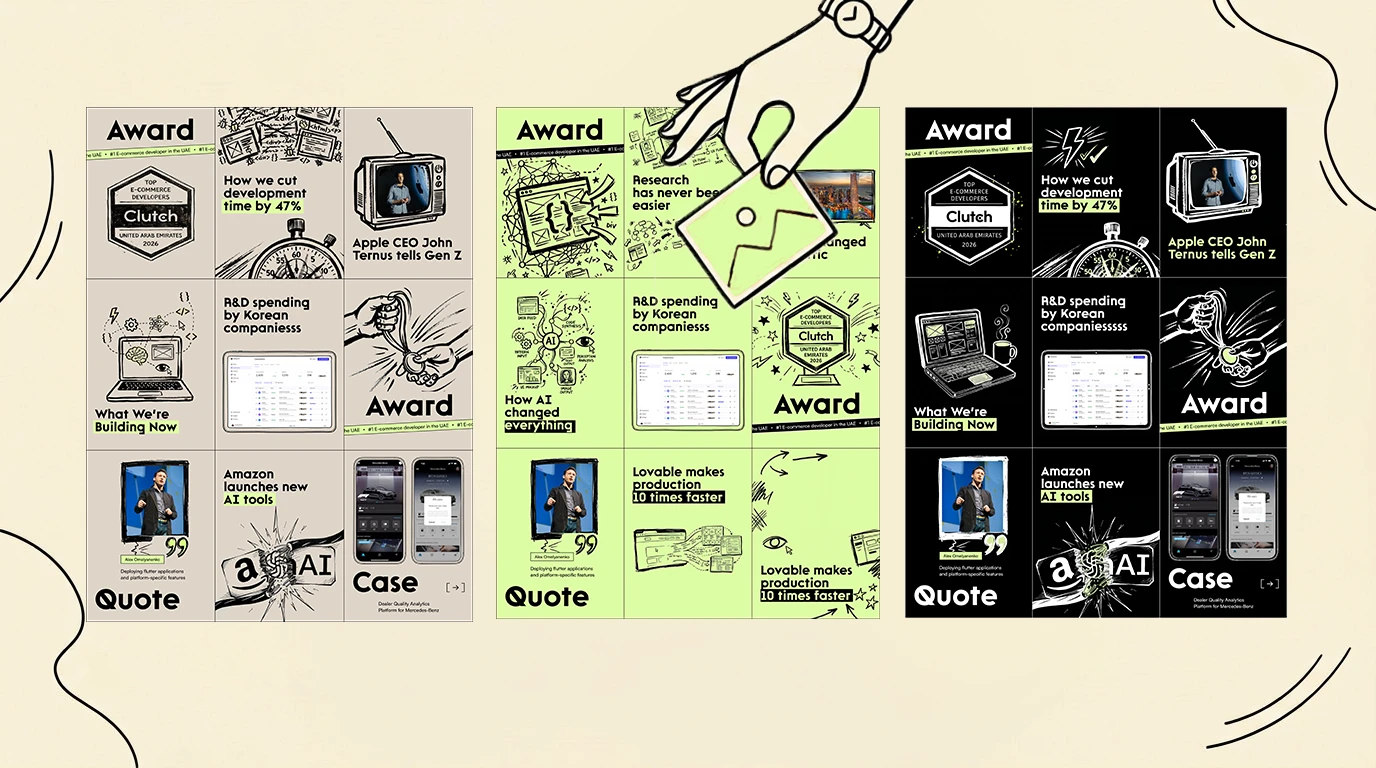
Drop an image into the slot and the template does the rest — it snaps to size, the named layers hold, and nothing shifts or breaks.
Compliance & Security
Results
Image prep dropped from 20–120 minutes to 2–30 minutes.
A non-designer now produces on-brand covers and carousels.
The marketer runs a weekly content rhythm without a dedicated designer.
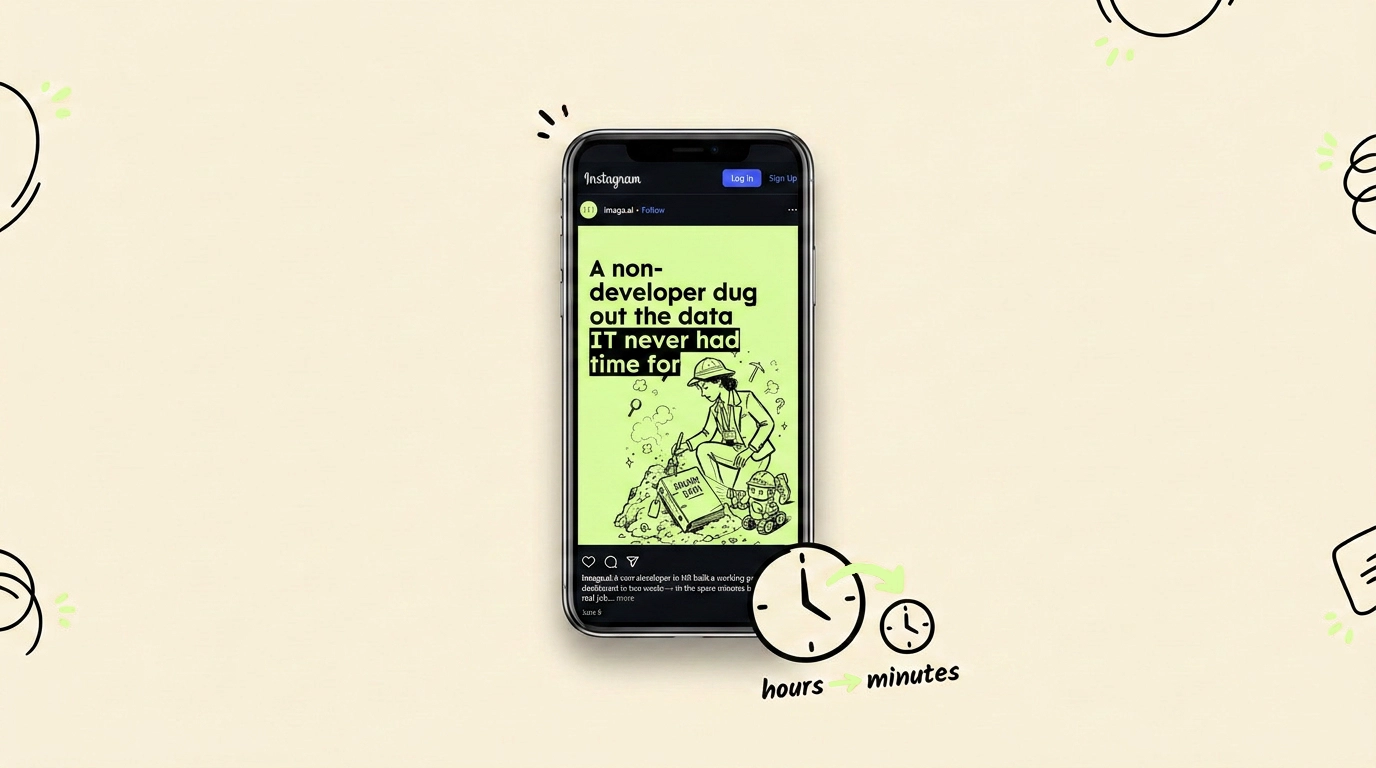
The visual that used to eat up to an hour now lands in as little as two minutes, still by someone with no design background.
See also

Designing an AI-Powered Journaling App for Daily Reflection and Personal Insights

Scientific Trial PDFs Extraction
Self-Hosted RAG Chatbot for AKFA Holding

SMM Content Automation with AI
17–22 PM Hours Saved per Project With AI Workflows